Technology is advancing deeper into the human body—not just via wearables but also through instruments that seem almost invisible. This time, the disruptor is smart contact lenses, a new kind of very thin, clear technology that rests on the eye and tracks health signals live. These lenses are no longer just vision-correcting tools. They are biometric sensors, emotional detectors, glucose monitors, and stress trackers — all within something you can barely feel.
With the health tech trend moving past smartwatches and fitness trackers, smart contact lenses hold out the promise of making monitoring your emotions, stress levels and chronic conditions something that happens instantly, comfortably and passively. Let’s take a look at how these futuristic micro-devices function and why they are poised to be one of the biggest breakthroughs in health monitoring.
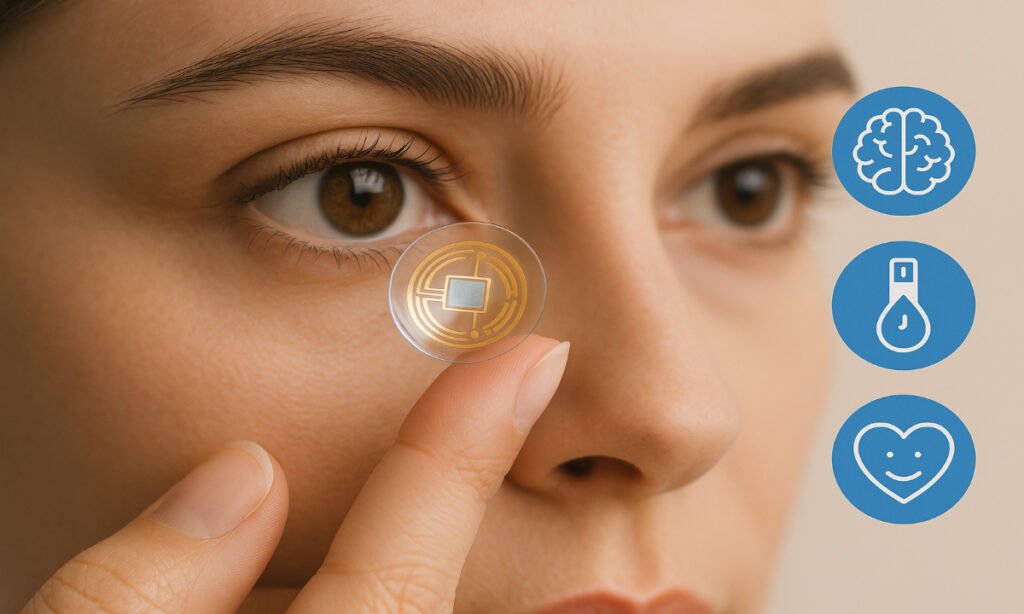
What Are Smart Contact Lenses?
Smart contact lenses are high-tech lenses that contain micro-sensors, microchips and ultra-thin electronics which can analyze the biomarkers present in your tears. These biomarkers can tell you what’s going on inside your body — from glucose to stress hormones and emotional triggers.
Instead of thick wearables, smart contact lenses extract information from the eye, one of the most data-rich parts of the body. Scientists have found that tears have a few hundred biological markers — so tracking them is a treasure trove for real-time health monitoring.
Also check- Personal AI Avatars: The You That Works While You Sleep
Smart contact lenses can monitor:
- Glucose readings for diabetes
- Stress indicators such as cortisol
- Emotional states via physiological changes
- Levels of hydration status
- Intraocular pressure (important for glaucoma patients)
- Environmental contributors, including UV exposure
It’s all happening continuously, which makes the technology a powerful ally for managing chronic disease, mental health and everyday wellness.
How Smart Contact Lenses Track Glucose & Stress Levels
1: Glucose Blood Draw Monitoring for Diabetics
Invasive methods such as finger pricking or adhesive punctal glucose sensors are traditionally used for monitoring glucose. Smart contact lenses provide a noninvasive alternative to blood testing by detecting glucose molecules in tear fluid. Micro-sensors inside the lens can measure glucose and transmit the information to a smartphone or other device.
This breakthrough has the potential to transform the lives of people with diabetes by:
- Removing the need for needles
- Providing continuous readings
- Mitigating the risk of unexpected spikes or drops
- Giving warnings before symptoms appear
2. Real-Time Stress Tracking On Cortisol
Today’s stress tracking is based on heart rate or sleep patterns, which are indirect measures. But smart contact lenses can detect cortisol—the body’s stress hormone—right in tears.
Elevated cortisol levels may suggest:
- Burnout
- Anxiety
- Stressful life
- Hormonal imbalance
With these lenses, users can even see their day-to-day stress patterns, giving them the ability to intervene before stress goes too far.
2: Emotional Monitoring Using Physiological Signals
Maybe emotion tracking is a little futuristic, but the biology is straightforward. Tears contain markers associated to emotions. Smart contact lenses can detect:
- Tear chemistry
- Eye temperature
- Micro-changes in blinking
- Pupillary responses
These factors can be combined to predict the probability of experiencing emotions such as:
- Happiness
- Stress
- Anxiety
- Tiredness
- Excitement
And this could help with mental health apps, therapy insights, and even personalised digital experiences.
Also read- Autonomous Delivery Drones: The Future of Logistics
How Smart Contact Lenses Work: Behind the Technology
Embedded Micro-Sensors in the Lens
These minute sensors respond to particular molecular events and convert them into data.
Transparent Microchips
Tiny circuits no thicker than a strand of hair are invisibly embedded in the lens, not obscuring vision.
Power Component
The smart contact lens is capable of:
- Wireless power transfer
- Micro-batteries
- Solar nanosystems in some prototypes
Live Transmission of Data
The lens transmits information to:
- Smartphones
- AI health dashboards
- Smartwatches
- Medical cloud platforms
AI Interpretation
Using artificial intelligence to analyze the biochemistry data, the company said it could discern trends in stress, glucose and emotional well-being.
Use Cases of Smart Contact Lenses
1. Diabetes Management
Continuous monitoring of blood sugar with no pain or patches is transforming life for millions.
2. Mental Health Support
Stress and emotional readings in real-time allow users to identify what triggers them, their habits, and how they are mentally.
3. Preventing Burnout
They have assistants like cortisol to tell us when it’s rising, so we can be reminded to take a break or lighten our load.
4. Fitness & Performance
Athletes track strain, dehydration and emotional stress during practice runs.
5. Chronic Eye Disease Monitoring
Detection of diseases such as glaucoma or dry eye using intraocular pressure data.
6. Personalized Wellness
AI-powered insights generate daily health summaries, emotional trends, sleep readiness scores and more.
Benefits of Smart Contact Lenses
- 24/7 health monitoring at the most Accurate Location
- Hands-free and inconspicuous.
- No discomfort or interruption of lifestyle.
- Real-time notifications and predictive analytics.
- Better chronic disease management.
- Early discovery of emotional and mental health changes.
Unlike smartwatches or rings, smart contact lenses offer increased precision and are far more discreet.
Challenges & Ethical Questions
Even though they hold promise, smart contact lenses present significant issues.
1. Privacy and Data Security
Biometric data is private. Users should be protected by clear regulations.
2. Comfort & Long-Term Wearability
While innovations have made them more comfortable, long-lasting evaluations are being carried out.
3. Accuracy & Calibration
Sensors need to stay accurate despite daily movements and variations in tears.
4. Emotional Data Ethics
Is emotional information something we should be keeping in apps, or employers?
Guidelines within the industry would be crucial.
FAQs
1. What is smart contact lens?
Smart contact lenses are sophisticated lenses with embedded miniaturized sensors that monitor glucose, stress and emotional indicators through tear fluid.
2. Are smart contact lenses an alternative to blood glucose monitors?
Not yet fully, but these are continuous, needle-free glucose monitors.
3. Is it safe to wear smart contact lenses each day?
Prototype testing shows they are safe, but long-term clinical approval is pending.
4. What information can smart contact lenses collect?
They are able to monitor glucose, cortisol (stress), hydration, emotions, eye pressure, and exposure to the environment.
5. How do they transmit information to devices?
Smart contact lenses wirelessly transmit data to phones or connected health platforms through micro-embedded electronics.
Conclusion
Smart contact lenses are poised to be the next step in personal health technology. What used to demand big gadgets, sensors, or a lot of manual tracking can now be done passively — through something as mundane as a contact lens. From tracking stress to perceiving emotional shifts and monitoring glucose in real-time, such lenses could revolutionize healthcare, emotional well-being and person’s daily activity.
With the development of this technology bringing it closer to everyday use, it hides the promise that in the future monitoring of your health will be seamless, proactive and invisible. Smart contact lenses could soon be the most powerful health tool you put on each day — and you won’t even notice.