The idea of a connected home is now way beyond simple automation. What started as controlling lights and thermostats with smartphones has now morphed into a profoundly intelligent, predictive, and emotionally aware ecosystem. This next generation, dubbed AI-Powered Smart Homes 3.0, represents a giant leap in evolution – homes that learn, think, customize, and communicate with us like a digital companion.
With artificial intelligence becoming more sophisticated and more deeply integrated into everyday objects, even the places we live, work and clean are getting a makeover. Smart Homes 3.0 is not about discrete devices but about an integrated, autonomic environment driven by real-time data, machine learning and personalized automation.
In this article, we take a look at how AI-Powered Smart Homes 3.0 is revolutionizing contemporary living, key enabling technologies, benefits, challenges, and what the future of this intelligent ecosystem looks like.
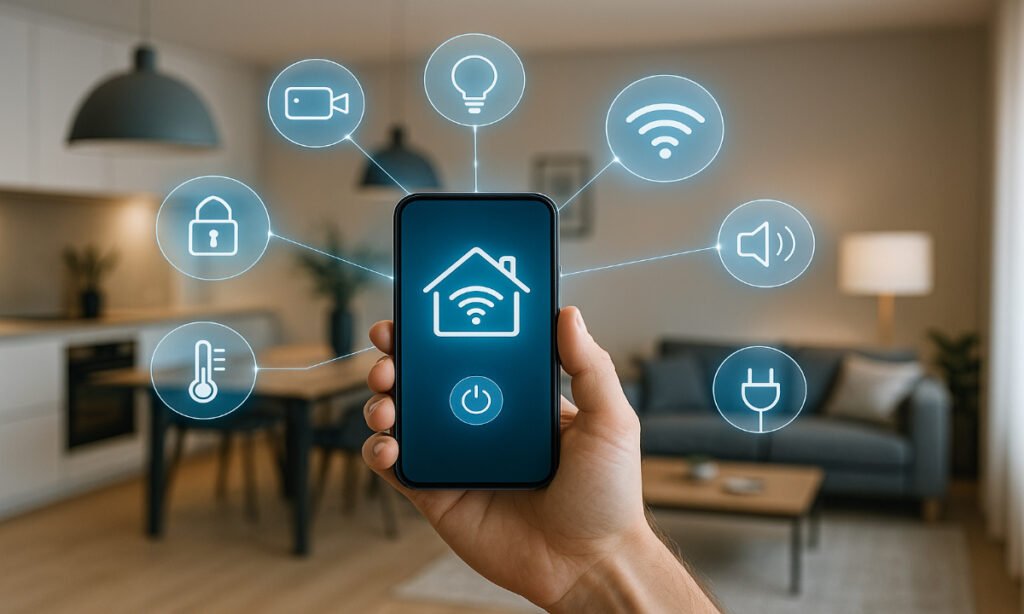
What Are AI-Powered Smart Homes 3.0?
3.0 AI-Powered Smart Homes are a multi-faceted, integrated home solution that enables intelligent control over the home and its operation (energy use, security, comfort, entertainment, and even health monitoring) through the application of AI. In contrast to prior generations that depended on human operation or very simple automation, this new stage has the following features:
- Predictive automation rather than reactive presets
- Sentiment-aware devices that can detect stress, mood, or well-being
- AI agents can take care of your climate, lighting, and security needs in the home.
- Energy consumption pattern- adaptive energy-efficient scalar control
- Multi-device coordination to enhance seamless user experiences across devices
They’re not just the homes that respond to a command—they’re the homes that expect one.
Also check Wearable Tech 3.0: Health Monitoring Beyond Smartwatches
Core Technologies Behind Smart Homes 3.0
1. Edge AI Processing
Smart devices are now processing data locally rather than shipping everything out to the cloud. This allows:
- Faster response times
- Improved data privacy
- Decisioning in real time
3D Edge AI enables lights, cameras, appliances, and sensors to think independently.
2. Advanced IoT & Interoperability
Today, devices can talk to each other using new protocols such as Matter that simplify cross-brand cooperation. This integrated network mitigates fragmentation and promotes better utilization.
3. Emotion & Behavior Recognition
Camera, microphones, wearables, and sensors identify:
- Stress levels
- Fatigue
- Mood changes
- Daily routines
The home uses that information to tailor temperature and lighting and even the music to emotional cues.
4. Autonomous AI Agents
Home AI agents serve as digital assistants that can:
- Monitoring appliance health
- Restocking groceries
- Saving energy
- Security Enhancements
The agents minimize human participation in everyday decisions… and that is not an unusual thing to see.
Also read AI-Powered Personal Assistants 3.0: The Next Evolution
Top Features of AI-Powered Smart Homes 3.0
1. Predictive Climate and Comfort Control
Your home is aware of your comfort levels (temperature, humidity, lighting brightness) and seamlessly fine-tunes them at all times of the day. Such as:
- Warm the room before you wake up
- Dim the lights when you are stressed
- Adjust the AC based on the energy price
2. Proactive Home Security
Smart Homes 3.0 employ AI-based surveillance to identify pets, visitors and would be intruders. Some of the features incorporated into these tools include:
- Real-time protection from threats
- Smart locks that change permissions
- Predictive notifications for unusual motion patterns
3. AI Cooking & Kitchen Assistance
The kitchen is the most intelligent room and appliances:
- Recipes suggestions
- Nutrition tracking
- Detect expired food products in the pantry
- Warm up the oven before you get there
There are even homes with robotic cooking arms and automated meal planning.
4. Intelligent Energy Management
Your habits are being tracked by AI, which in turn uses up less energy. It may:
Less waste
- Shut down unused devices
- Shift electricity consumption to off peak hours
- The house is more energy-efficient and cost-effective.
5. Personalized Health Monitoring
By employing motion sensors, biometrics, and connected wearables, your home can track:
- Quality of sleep.
- Trends in Heart Rate
- Patterns of Movement
- Stress Indicators
This has the potential to be life-changing for elderly care and chronic health management.
Benefits of AI-Powered Smart Homes 3.0
1. More convenient living
Your home does its chores without being prompted–safer, less stressful and more time on your hands.
2. Increased Energy Efficiency
Smart enables your home to use only as much energy as it needs, saving you money on bills and living sustainably.
3. Heightened Security
Home security gets even smarter with predictive monitoring and intelligent access control.
4. Enhanced Health and Wellness
Emotion-aware gadgets generate a personalized wellness environment that enhances everyday living.
5. Streamlined Daily Life
It’s all connected—lights, HVAC, entertainment systems, appliances—and none of it requires input from the user.
Challenges of Smart Homes 3.0
1. Data Privacy Concerns
Emotion recognition and continuous monitoring generate privacy concerns that vendors need to address.
2. High Initial Investment Cost
Because they use AI instead of hard coding, smart devices and automated systems can be more expensive in the initial stages of adoption.
3. Technology Fragmentation
While standards such as Matter are making inroads, true universal compatibility across all brands is evolving.
4. Reliance on Connectivity
Smart Homes 3.0 are still network-dependent, requiring a stable and fast network to work best.
Future Trends in AI-Powered Smart Homes 3.0
1. Home Digital Twins
A virtual twin of your home that anticipates problems before they happen—such as leaks, energy spikes, or appliance malfunctions.
2. Autonomous Home Maintenance
Robots that autonomously clean, maintain, repair, and detect problems in home systems.
3. Emotion-Centric Personalization
Homes that respond to emotional changes using live biometric data from users.
4. Voice-Free Smart Homes
The need for commands will be replaced or reduced by gesture control, presence detection, and predictive automation.
5. Multi-Agent Smart Home Ecosystems
A group of AI agents working in tandem to manage a variety of tasks associated with security, cleaning, scheduling, and comfort management.
FAQs
1. What differentiates the AI-Powered Smart Homes 3.0 from the traditional smart homes?
They employ predictive intelligence and emotional intelligence rather than simple automation or manual inputs.
2. Are Smart Homes 3.0 secure?
Yes, they mostly employ strong encryption and AI threat detection, but the user has to do their part to keep themselves secure.
3. Do I need to buy expensive devices to get started?
No. You can start with a handful of smart sensors and scale off.
4. Can I use Smart Homes 3.0 without Internet connection?
Many functions are available offline with local edge AI capabilities, and cloud services can add more features.
5. Could AI supersede human decision-making in homes?
AI enhances and automates tasks, rather than replacing human control. Users can customize every automation level.
Conclusion
AI-Powered Smart Homes 3.0 are poised to be a radical change in our living and interaction with the environment. They combine AI agents, advanced sensors, emotion detection technology and autonomous decision making to make a living space more efficient, safer and personalized than ever. As these technologies mature, our homes will do more than simply be “smart”; they will be genuinely intelligent, responding to us in real time and helping us live healthier and more comfortable lives.
The new era of Smart Homes 3.0 has arrived and it will define the future of contemporary living.