The field of artificial intelligence is changing how humans interact with machines and one of the biggest breakthroughs in recent times is the emergence of AI-Powered Personal Assistants 3.0. These next-generation digital party packs far exceed the simple voice-based utility-driven applications that started being introduced in the early 2010s. Rather than reacting to simple commands reactively, Personal Assistants 3.0 are intelligent, proactive, emotionally aware, highly personalized AI systems that can anticipate user needs with stunning accuracy.
From juggling demanding schedules to estimating stress levels, writing imaginative content and managing smart homes, the novel assistants present a new definition of work, engagement and life. With AI becoming increasingly advanced, personal assistants are transforming into digital partners that help users with their long-term objectives and contribute to their overall health. Here we take a look at how the technology is developing, what differentiates it from previous generations, and why it is going to become indispensable in daily life.
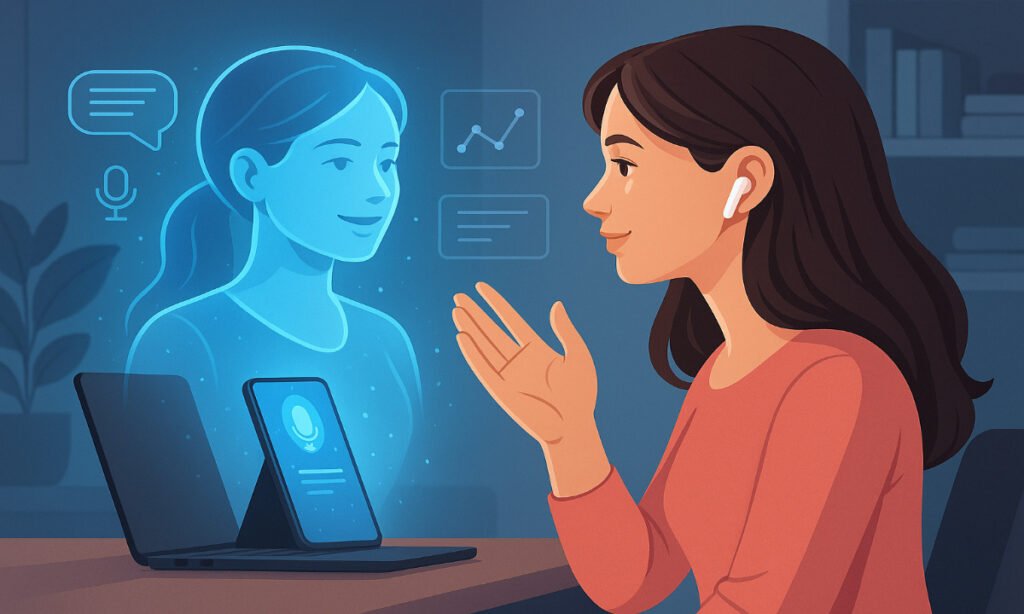
1. Understanding the Leap to AI-Powered Personal Assistants 3.0
The original iterations of AI assistants—Siri, Google Assistant, Cortana, and Alexa—were largely command- and query-based systems designed for rudimentary tasks. The second generation enabled some contextual awareness and the assistant could execute routines and work with smart devices. But the 3.0 version of AI personal assistants is a giant leap forward, they use sophisticated generative AI models, deep learning, multimodal processing, and real-time personalization.
Such assistants are able to:
- Modeling Habits & Meta-behaviors
- Ever Learning With every Interaction
- Anticipating user needs before being asked
- Providing emotional support via natural, empathetic communication
- Seamlessly integrating with home, health and workplace ecosystems
More intelligent, they behave less like mechanical tools and more like cooperative digital labor.
2. Human-Like Emotional Intelligence and Sentiment Awareness
Among the most revolutionary capabilities of the AI-based personal assistants 3.0 is the interpretation of emotions. Thanks to sentiment analysis, vocal intonation recognition, facial mapping (optional) and behavior indicators, these assistants are able to reply in a more human answer. For instance, when users sound stressed, the assistant can:
- Ask you to take a break
- Reschedule meetings to reduce the overload
- Play calming music
- Suggest mindfulness exercises
- Provide motivating messages
This emotional intelligence makes the assistant more like a coach and less like a robot, which is a new way humans and AI interact on a personal level.
Also read- The Future of 6G Technology: What to Expect
3. Deep Personalization for Work, Life, and Well-Being
Today’s digital life is complicated – with multiple apps, tasks, and obligations. AI-driven personal assistants 3.0 will be able to seamlessly combine those layers and orchestrate them within a user-centric digital environment.
Work & Productivity
These assistants can handle calendars, build presentations, write emails, plan days and provide insights on productivity trends. They’re even able to serve as real-time brainstorming partners or summarize meetings with a high degree of accuracy.
Home & Lifestyle
From changing the temperature at home to planning a trip or suggesting what to cook with the contents of your fridge, assistants are able to manage daily chores with ease.
Health & Wellness
Based on sleep, heart rate, activity levels, or stress signals (from wearables), the assistant can propose wellness plans, book checkups, remind users to take medication, and encourage healthier routines.
This highly individualized customization is among the greatest selling points of third gen AI assistants.
4. Multimodal Interaction: The Future of Communication
Personal assistant 3.0 based on AI are no longer limited to voice and text. They operate via several channels of communication:
- Voice commands
- Typing input
- Gesture recognition
- Image processing
- Video interaction
- Augmented reality (AR) and virtual reality (VR)
This multimodal format introduces an unprecedented level of convenience. A user will be able to show the assistant a handwritten note, snap a photo of a document, or even interact with a holographic projection in homes of the future. The assistant is able to adjust in real time, no matter the source of input; whether the user is speaking or touching the screen.
5. Autonomous Decision-Making and Predictive Assistance
Certain characteristics that shape the AI assistants 3.0 are the autonomy aspect. With permission, the assistants can also make decisions for you.
For example:
- When conflicts arise, it will automatically arrange your schedule for you
- Bills or subscriptions to pay
- Reordering products when inventory runs low
- Rescheduling travels when flights are altered or canceled - or just informing you of those changes
- Preventing distractions while you work out – this one is my personal favourite
This forward-acting activity relieves the tension and takes away the need for the constant, manual overseeing.
Also check out- Best AI Tools for Businesses in 2025
6. Deep Integration With Smart Homes, Cars, and IoT Devices
The next generation personal assistants will act as the central nervous system for whole digital ecosystems. They are all synchronized at each point of contactWhether you are controlling smart home products, EVs, or wearables, they all synchronize at every point of touch.
They can:
- Dimming lights and adjusting the temperature for comfort
- Heat your car while you wait
- Track your location for safety
- Energy management
- Monitor your home security system
- Sync health data from wearables
The result is an integrated environment that creates a seamless lifestyle where technology serves the user, not the reverse.
FAQs
1. In what ways are AI-Powered Personal Assistants 3.0 different from previous versions?
Proactive, emotionally intelligent, more autonomous and deeply personalized. They are learning and they are designed to handle more complex tasks than simple commands.
2. Is it safe to use AI-Powered Personal Assistants 3.0 in terms of privacy?
Yes. Most have encrypted data processing, privacy controls and options for on-device learning. Users are able to select which data the assistant can access.
3. Can we substitute actual human contact with these assistants?
No. They’re made to enhance human tasks, not replace relationships. Their role is to make you more productive, convenient, and well.
4. Can I use the AI-powered Assistant on all my devices?
They are designed to sync effortlessly across platforms and are compatible with smartphones, laptops, wearables, vehicles, and smart home systems.
5. Which sector will be the biggest beneficiary?
Healthcare, business, education, e-commerce, wellness, and customer service will be among the top beneficiaries as automation and improved personalization drive major improvements.
Conclusion
A New Era for AI-Powered Personal Assistants 3.0 is a key phase of the overall digital revolution. These supercharged assistants don’t just execute commands anymore — they’re smart, intuitive, emotionally aware digital companions that can boost productivity, support mental wellness, help manage daily life and ultimately serve as a bridge between humans and technology. As we venture even further into the age of hyper-connected future, personal assistants 3.0 will take center stage in influencing how people live, work, communicate and perceive the world around them.