Quantum computing is quickly reshaping the future of computing power, with capabilities that were not possible with classical machines. As industries race toward digital transformation, quantum computing is becoming a pivotal technological advance that is expected to bring next-gen computing power to solve ultra-complex problems in a matter of seconds. With worldwide funding swelling and tech behemoths scrambling to develop scalable quantum processors, this revolution is no longer theoretical—it is happening on a real-time basis. Quantum computing is now considered by companies, academics, and governments to be the next great frontier that could revolutionize cybersecurity, artificial intelligence, drug discovery, finance, materials science, and national defense.
The essence of all quantum computations is based on the power of qubits, which have the unique ability to store and process information distinctively compared to classical bits. Instead of being just 0 or 1, qubits can be in many states at once in their superposition. They can also impact each other via entanglement, so quantum computing is exponentially more powerful than classical computing architectures. This transition allows for calculations that are too complicated for supercomputers, paving the way for advancements in every industry that relies on data. The global tech industry has been stretching classical computing for years, but physical limits — such as the slowing of Moore’s Law — have made next-gen computing power urgently needed. Quantum computing is now touted as the ultimate solution to break such barriers by leveraging laws of quantum physics to surpass bottlenecks faced by traditional processors. Hence, a quantum machine can execute certain tasks at a speed that is not achievable by any classical system.
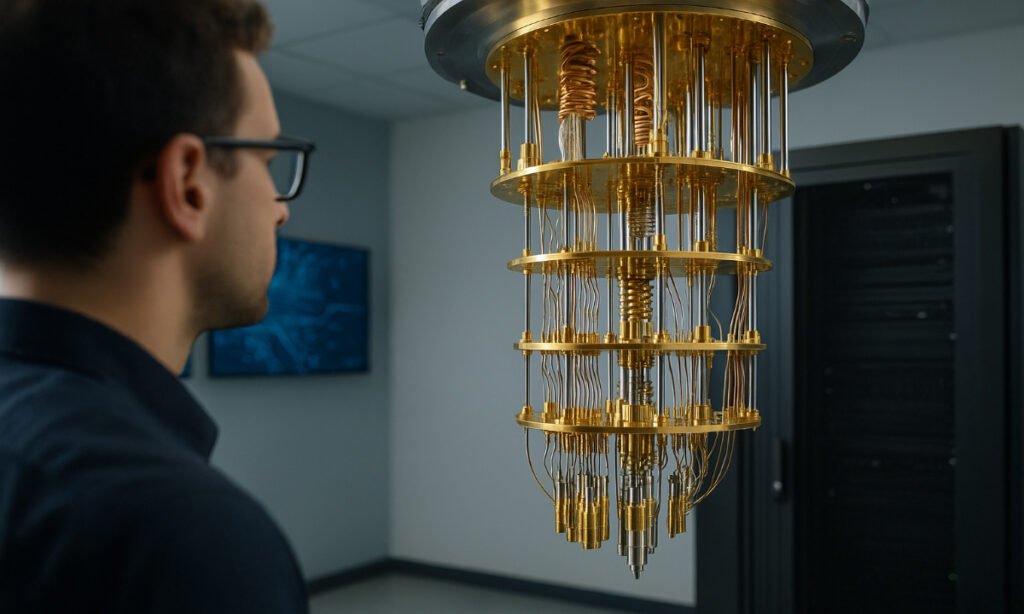
Why Quantum Computing Is Generating Next-Gen Computing Power
Quantum computing Pinnacle Quantum computing performance is high because it computes data in multidimensional space, which is unreachable for a classical system. That’s an important capability for working through problems that involve big data, complicated simulations or optimization puzzles.
Among the key benefits are:
1. Exponentially Faster Processing
Quantum computers analyze millions of options simultaneously. For big data industries, such as finance, healthcare, and logistics, this efficiency has transformative potential.
2. Complex Optimization Capabilities
Quantum computing can also be used to optimize problems with billions of variables — traffic routing, power grids, supply-chain logistics, even portfolio risk. Quantum computing specializes in scenarios with many variables, including traffic optimization, energy management, supply-chain logistics, and portfolio risk evaluation.
3. Advanced Simulation Power
Classical systems are unable to simulate molecular, chemical, or atomic interactions in a scalable manner. Quantum computing facilitates the creation of hyper-accurate simulations that lead to breakthroughs in biotech, drug development, and materials science.
4. Disrupting Modern Cryptography
Quantum computing: Decoding disruptions of the day and prediction of those in tomorrow By Richard Kettlewell. Our current encryption standards are vulnerable to quantum computing, which is leading enterprises to move to post-quantum cryptography. It’s a change in how the world secures sensitive information, and it’s a massive change.
5. Advanced AI Training and Acceleration
Quantum computing delivers advanced processing power for training AI models that lead to more accurate predictions, deeper insights, and accelerated automation workflows, providing more value to customers more quickly.
Also read- How to Improve DH58GOH9.7 Software for the Future
Real-World Applications Driving the Transformation
Quantum computing is moving from labs to practical applications as the hardware stabilizes and software platforms mature.
Here are a few industries now being turned upside down:
Healthcare and Drug DiscoveryQuantum algorithms enable researchers to simulate molecules in ways that were impossible before. That means less time spent farming out drug interactions, designing personalized treatments and testing compounds virtually.
Cybersecurity and Cryptography
As encryption attacks grow, governments and corporations are preparing for quantum-resistant protocols. Quantum computing undermines existing systems and can be used to develop new security techniques such as quantum key distribution (QKD).
Financial Services
Quantum computing enables banks and investment firms to process real-time analysis of complex market conditions, trading strategies, risk evaluation, and financial modeling.
Manufacturing and Materials Science
Quantum simulations enable engineers to design stronger, lighter, and more sustainable materials. This is particularly important for the automotive, aerospace, electronics, and energy sectors, among others.
Climate Modeling and Sustainability
Quantum computers can accurately model climate activity, and energy flows to better enable which allows researchers to build better climate resilient technologies.
Logistics and Supply-Chain Optimization
Global supply chains have become complex affairs with dust-ups in any one of millions of components having impacts. Quantum algorithms can be used for routing, warehousing, demand forecasting, and resource management on a very large scale.
Also check- What Is “1.5f8‑p1uzt”?
Why Businesses Should Start Preparing Today
Full-blown quantum computing is still developing, but getting ready is essential. Organizations that start to educate themselves, test, and adopt quantum tools now will have the potential to gain competitive advantages for a long time. Prepare a few preparatory steps as follows:
- Quantum computing fundamentals review
- Applying post-quantum cryptography
- Supporting workforce development for quantum-capable skills
- In partnership with cloud quantum providers such as IBM, Google, and Microsoft , among others,
- Researching nascent quantum algorithms and applications
Quantum computing is not about the death of classical systems, but more about their integration and acceleration. To grasp the real potential of quantum computing and the next wave of digital transformation, businesses that evolve with the hybrid computing future will have a leadership position.
FAQs
1. What is quantum computing?
Quantum computing is the use of quantum mechanical phenomena such as superposition and entanglement to perform computation beyond traditional computers by utilizing qubits and the rules of quantum physics, to address multi-faceted problems.
2. How does quantum computing differ from classical computing?
In classical computing, bits are either 0 or 1, but in quantum computing, the basic unit of information is a quantum bit or qubit, which can be in multiple states at the same time. The processing power is vastly greater.
3. In which industries will quantum computing be most useful?
A lot of the greatest impact will be in areas like finance, healthcare, cyber security, materials science, logistics and climate research.
4. Can quantum computing break modern encryption?
Yes. You can break a lot of widely used encryption with quantum computing, which is one of the reasons companies are moving to post-quantum security.
5. Is quantum computing available today?
Yes but at a nascent stage. Cloud-based services now allow you to access quantum processors, too, for you to develop and test your quantum algorithms.
Conclusion
Quantum computing is now not just a scientific achievement – it is the basis of next-gen computing power that will change how the world processes data, secures information, and addresses global issues. As classical computing is hitting the boundaries of what is physically possible, quantum computing is taking over and promising previously unimaginable speeds, accuracy and problem-solving. Those who do will be best positioned for the computational requirements of tomorrow. Because it can speed up AI, transform cybersecurity, revolutionize global supply chains, and push science to new frontiers, quantum computing will likely be among the most disruptive technologies of our era.