Quordle has quickly gained popularity among word game enthusiasts, offering a challenging twist on traditional word puzzles like Wordle. Unlike Wordle, where players guess a single five-letter word, Quordle requires solving four words simultaneously in just nine attempts. To succeed, many players turn to resources like Merriam-Webster, one of the most trusted dictionaries, to sharpen their vocabulary and enhance their gameplay. This article explores the relationship between Quordle and Merriam-Webster, strategies for improvement, and tips for players at all levels.
What is Quordle?
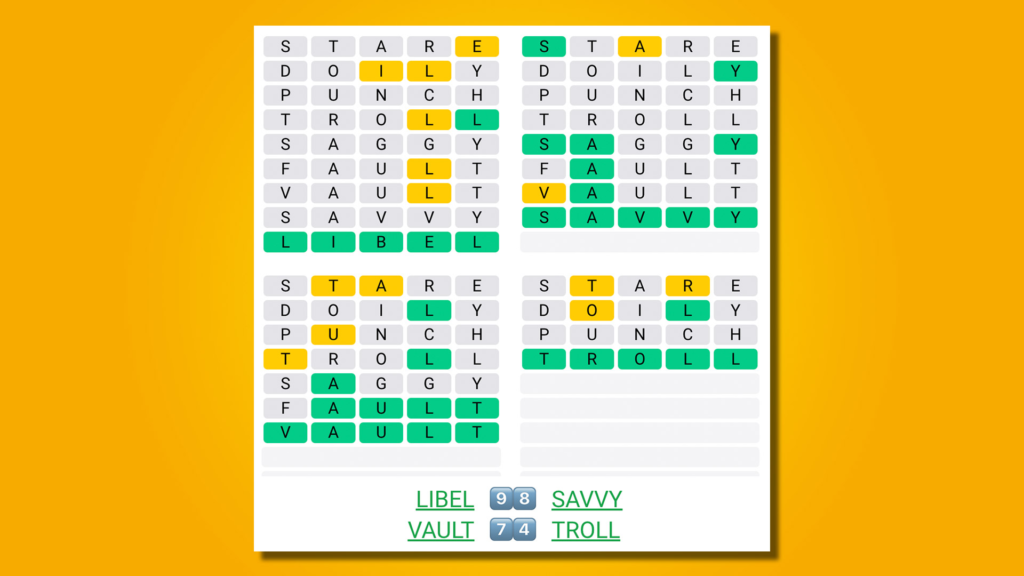
Quordle is a daily word puzzle game that takes the core mechanics of Wordle and amplifies the challenge. Players are presented with four hidden five-letter words and must guess all of them using shared attempts. Each guess provides color-coded feedback:
- Green indicates the correct letter in the correct position.
- Yellow indicates the correct letter in the wrong position.
- Gray indicates the letter is not in the word.
The key to Quordle is strategy and vocabulary knowledge. Players must balance guessing common vowels and consonants while interpreting feedback for all four words. This is where a solid understanding of English words, definitions, and letter patterns—like those provided by Merriam-Webster—becomes essential.
Why Merriam-Webster Helps Quordle Players
Merriam-Webster is more than just a dictionary—it’s a comprehensive resource that includes word meanings, pronunciations, synonyms, antonyms, and usage examples. For Quordle players, Merriam-Webster can be invaluable for several reasons:
1. Expanding Your Vocabulary
Quordle is all about five-letter words, many of which are not frequently used in everyday conversation. By exploring Merriam-Webster, players can discover words like nymph, bravo, or quill, increasing their chances of success.
2. Understanding Word Patterns
Merriam-Webster provides detailed explanations about prefixes, suffixes, and root words. Understanding these patterns helps players predict potential word formations in Quordle.
3. Learning Rare Words
Daily Quordle challenges often include uncommon words. Checking a word in Merriam-Webster after playing helps reinforce learning, so players gradually improve their game.
4. Synonyms and Word Alternatives
Sometimes, guessing a word requires thinking of synonyms or related words. Merriam-Webster’s thesaurus function is perfect for brainstorming alternatives.
How to Use Merriam-Webster Effectively in Quordle
While Quordle is a game of skill, using Merriam-Webster strategically can significantly improve performance. Here are some practical tips:
Tip 1: Start with Common Five-Letter Words
Begin by guessing words that use common letters like A, E, R, S, and T. After receiving feedback, use Merriam-Webster to explore words that fit the remaining letters and positions.
Tip 2: Keep a Word List
Create a personal list of five-letter words from Merriam-Webster. Group them by vowels and consonants or patterns. This list becomes a valuable reference during challenging Quordle rounds.
Tip 3: Learn Letter Frequencies
Merriam-Webster can help identify commonly used letters in English words. Recognizing which letters appear frequently can guide your guesses more strategically.
Tip 4: Practice with Word Definitions
After playing a round of Quordle, look up any words you didn’t know in Merriam-Webster. Understanding definitions helps retain the words in memory, enhancing future gameplay.

Strategies to Improve Your Quordle Score
Success in Quordle doesn’t just depend on knowing words—it requires clever strategies. Here’s how combining knowledge from Merriam-Webster with gameplay techniques can boost your score:
1. Prioritize Vowels Early
Words typically contain one or two vowels. Start your guesses with words like adieu or ratio, which contain multiple vowels, to identify vowel positions quickly.
2. Use Letter Elimination
Each guess provides clues not just for one word, but for all four. Track letters that are confirmed or eliminated and narrow down your options systematically.
3. Focus on Word Patterns
Look for patterns like double letters (ll, ss) or common endings (-ed, -er, -ly). Merriam-Webster can confirm these patterns and suggest possible words you might not think of instinctively.
4. Balance Risk and Safety
Avoid guessing obscure words too early. Start with common words to maximize letter identification, then use Merriam-Webster to explore less common words if you’re stuck.
Common Mistakes Quordle Players Make
Even experienced Quordle players can struggle if they overlook simple strategies. Here’s what to avoid:
- Ignoring letter positions: Some players focus only on correct letters, not their positions. Feedback colors matter!
- Overusing obscure words: While uncommon words can be tricky, relying on them too early wastes guesses.
- Skipping dictionary use: Not looking up unknown words prevents learning, limiting long-term improvement.
- Failing to track guesses: Without organizing previous guesses, it’s easy to repeat mistakes.
Using Merriam-Webster consistently can address these mistakes by improving knowledge and reinforcing correct patterns.
Quordle and Learning: Educational Benefits
Quordle isn’t just a fun pastime—it can actually enhance language skills. Integrating Merriam-Webster into your gameplay offers educational advantages:
1. Vocabulary Expansion
Players are exposed to hundreds of new words, improving both written and spoken English skills.
2. Spelling Skills
Frequent exposure to five-letter words strengthens spelling and letter recognition.
3. Cognitive Development
Quordle challenges memory, problem-solving, and pattern recognition, offering a mental workout similar to Sudoku or crossword puzzles.
4. Motivation to Learn
The game’s feedback system encourages players to learn new words and definitions in Merriam-Webster, making vocabulary acquisition interactive and fun.
Best Practices for Daily Quordle Challenges
- Set a Time Limit: Keep your daily challenge manageable—don’t spend hours guessing endlessly.
- Review Incorrect Words: After finishing, check definitions in Merriam-Webster for words you didn’t know.
- Rotate Starting Words: Avoid using the same starting words every day; rotate them to cover more letters.
- Focus on Learning, Not Just Winning: The goal is both success in the game and improving your vocabulary.
Online Tools and Resources
Aside from Merriam-Webster, other tools can enhance Quordle performance:
- Scrabble word finders: Useful for identifying letter combinations.
- Anagram solvers: Helpful when letters seem to fit multiple patterns.
- Educational apps: Vocabulary builders can supplement Merriam-Webster’s dictionary.
READ ABOUT:
Slack AI News Today: What’s New and Why It Matters
Conclusion
Quordle is an exciting and challenging word game that rewards both strategy and vocabulary knowledge. By using Merriam-Webster as a companion, players can significantly enhance their skills, improve word retention, and enjoy the educational benefits of learning new words. Whether you’re a casual player seeking fun or a competitive word puzzle enthusiast, integrating Merriam-Webster into your Quordle practice ensures smarter gameplay and consistent improvement.
Mastering Quordle is not just about guessing—it’s about understanding words, patterns, and language itself. With practice, patience, and the right resources, anyone can become a Quordle champion.
FAQ:
Q1: What is Quordle?
A1: Quordle is a word puzzle game where players guess four five-letter words simultaneously within nine attempts.
Q2: How can Merriam-Webster help with Quordle?
A2: Merriam-Webster helps expand vocabulary, understand word patterns, and learn rare or uncommon words that may appear in Quordle.
Q3: What is the best strategy for Quordle?
A3: Start with common letters, track guesses carefully, focus on word patterns, and use dictionaries to explore less common words.
Q4: Is Quordle educational?
A4: Yes, Quordle improves vocabulary, spelling, memory, and cognitive skills while making language learning interactive and fun.