Blockchain is no longer just the infrastructure underlying cryptocurrencies such as Bitcoin and Ethereum. Over the last few years, it has grown to be one of the most exciting technologies the world has seen in terms of protecting data, validating transactions, and digitizing operations. Today, many organizations in supply chain management, digital identity, asset tokenization, healthcare, finance, and government services are leveraging the transparency, immutability, and auditability of blockchains. As a consequence of these and other trends, Blockchain Beyond Crypto is becoming a potent driver of innovation.
The ability of blockchain to enable much, much more was buried under all the hype and promises around cryptocurrency when it was first unveiled to the world. Companies consider blockchain as a dependable means for verifying authenticity, preventing fraud, increasing traceability, and establishing trust. This technology is revolutionizing the way enterprises store data, run contracts, and move value. Built on decentralization principles, it eliminates the need for third parties and introduces efficiency in processes or systems that relied on the verification of an external party.
In this article, we discuss how blockchain is enabling the development and transformation of three focus areas—supply chains, digital identity, and digital assets—as well as emerging use cases in each that could be leading the future of decentralized technology.
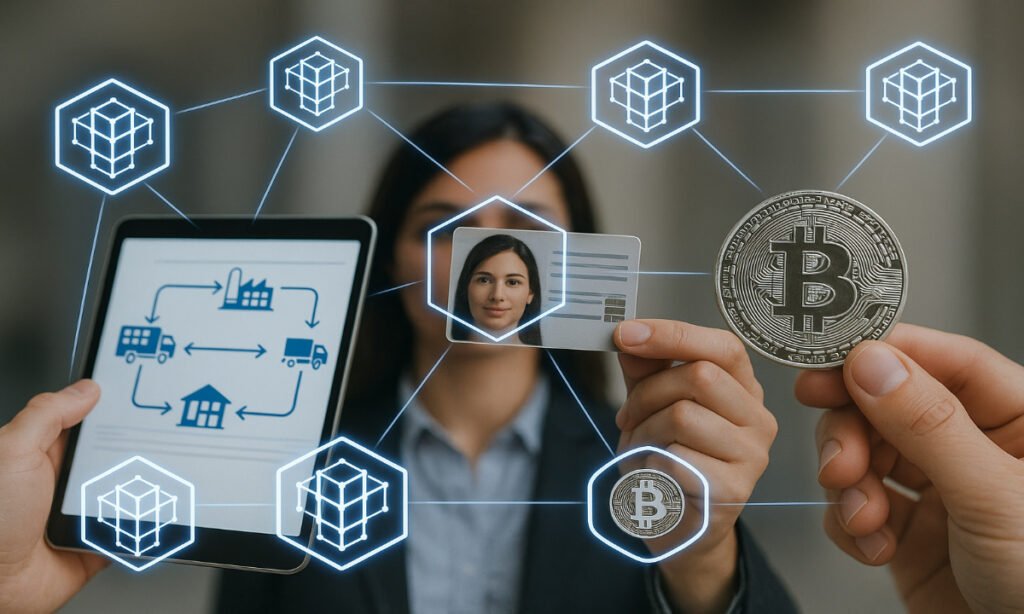
Blockchain in Supply Chain: Transforming Transparency & Trust
Supply chains are intricate webs made up of manufacturers, distributors, suppliers, logistics companies, and retailers. Conventional global supply chains are subject to poor visibility, counterfeiting, delays, and data inconsistencies. This is where Blockchain Beyond Crypto takes the game to a whole new level.
Blockchain provides full traceability, with every stage of the product flow being securely recorded. Every transaction creates a new block in the chain, which is permanent and can be viewed by all parties authorised to see the blockchain.
Key benefits of blockchain in supply chains:
1. Live Goods Traceability
Companies can monitor the movement of goods from the supplier to the customer. Consumers can authenticate product by scanning QR code that contains blockchain records.
2. Minimized Counterfeiting
Counterfeits abound in pharma, luxury goods, electronics and food and beverage. Trust is established and the product is verifiable.
3. Quicker Dispute Resolution
With records that are transparent, companies can easily resolve issues related to delayed shipments, bad products and quantity discrepancies.
4. Streamlined Compliance
Regulated sectors such as the food industry and the healthcare sector have a lot to gain from these automated compliance checks on blockchain-verified information.
5. Reduced Cost of Operation
By simplifying the process and removing paperwork, middlemen, and manual auditing, companies can achieve significant cost reductions.
Leading global firms such as IBM, Maersk, Walmart, Zara, and Nestlé are leveraging blockchain to track inventory, confirm sourcing, and ensure product quality.
Also read- Agentic AI Systems & Autonomous AI Workflows
Blockchain for Digital Identity: A New Era of Secure Verification
Digital ecosystems have been plagued for years by problems such as identity theft, data breaches, fake profiles, and privacy concerns. Because traditional identity systems are based on centralized databases, they are susceptible to being hacked or misused. Blockchain Beyond Crypto presents a secure, decentralized identity solution – Self-Sovereign Identity (SSI).
How blockchain reshapes digital identity:
1. Self-Owned Identity
Users have ownership of their digital identities and do not rely on governments or corporations to facilitate access or control management. They decide what information to disclose and with whom.
2. Tamper-Proof Verification
Identity documents like passports, academic degrees, licenses and certificates can be placed on the blockchain and made virtually impossible to fake.
3. Faster KYC & Onboarding
Banks, telecom providers, and fintech platforms can confirm identities in real time with blockchain-based credentials.
4. Privacy Protection
When using blockchain for information proofs are made of zero-knowledge, which means you prove something without revealing any private information.
5. Avoiding Centralized Breaches
Data is decentralized, and even if one node is attacked, the identity system will be kept secure.
Estonia, Singapore, and South Korea are among the leaders in implementing blockchain identity solutions for public services, health records, and secure digital governance.
Also check- How to Contact G15Tools.com Easy Guide for Quick Support
Blockchain for Digital Assets: The Future of Tokenization
Blockchain has opened the door for a new type of digital assets that goes well beyond cryptocurrency. Tokenization is the process of converting an asset that exists in the real world — like real estate, art, music rights, stocks, patents, or commodities — into a digital token that lives on and can be stored and traded on blockchain networks.
Why tokenization is gaining momentum:
1. Fractional Ownership
High-value items such as property or art can be divided into smaller tokens, making it possible for anyone to invest without requiring a ton of cash.
2. High Liquidity
Tokenized assets, in contrast to physical ones, can be traded immediately on digital exchanges.
3. Faster & Cheaper Transactions
Token exchanges are done on blockchain, which eliminates the need for intermediaries such as brokers and also reduces transaction charges.
4. Transparent Ownership Records
Every change of ownership is securely recorded minimizing disputes or fraud.
5. Global Access
People all over the world were now able to invest in these same assets — and in doing so, economies became borderless.
From NFTs in digital art, to real estate tokenization and enterprise asset management, Blockchain Beyond Crypto is transforming asset ownership models.
Why Blockchain Beyond Crypto Matters More Than Ever
The growth of blockchain technology in non-cryptocurrency applications can be attributed to the following three drivers:
1. Increasing Requirement for Trust in Digital Ecosystem
With the increasing threat of cyberattacks, decentralized validation is becoming a must-have.
2. Transition to Data Transparency
Both businesses and consumers want to know where the products originated and that they are real.
3. Expansion of Web3 & Decentralized Applications
Blockchain forms the core of Web3, the foundation for next-generation business models and digital economies.
FAQs
1. What is “Blockchain Beyond Crypto”?
It is the application of blockchain technology to industries other than cryptocurrency, including supply chain, identity, and digital asset management.
2. What are the benefits of applying blockchain to the supply chains?
It also brings transparency, reduces fraud, facilitates quicker verification, and tracks goods in real-time. It also increases transparency, decreases fraud, facilitates verification, and offers real-time tracking of goods.
3. Can we trust blockchain in terms of digital identity?
Yes. Blockchain also offers secure, decentralised identity verification with robust privacy protections.
4. What do you mean by tokenized digital assets?
These are real or digital assets that are tokenized on blockchain and can be purchased and sold on the market.
5. Can blockchain reduce business costs?
Definitely. By avoiding the use of intermediaries, minimizing paperwork, and streamlining verification, distribution of blockchain distribution reduces the cost of operations to a great extent.
Conclusion
Blockchain is quickly evolving from a cornerstone of cryptocurrency to being positioned as a source of trust, transparency, and digital innovation. From securing global supply chains and managing digital identities to enabling tokenized assets, blockchain offers powerful benefits that make these services more efficient, authentic and secure. With growing sectors turning towards decentralised systems, Blockchain Beyond Crypto are set to change the face of the contemporary digital economy. The winners will be those organizations that view blockchain, not as a crypto tool, but as a transformative technology for global operations, governance and value exchange.