With digital activity now encompassing banking, shopping, government services and social platforms, the demand for safe identity management has never been greater. Passwords are going out of style, data breaches are increasing and users want to have more control over their personal data. This transformation has made room for a massive tech upgrade: biometric identity wallets.
These wallets leverage biometrics, encryption and distributed storage to enable people to safely manage and prove their digital identities on the Internet. In light of more sophisticated cyberattacks in 2025, biometric identity wallets are leading the way to a more convenient, private, and secure online life.
What Are Biometric Identity Wallets?
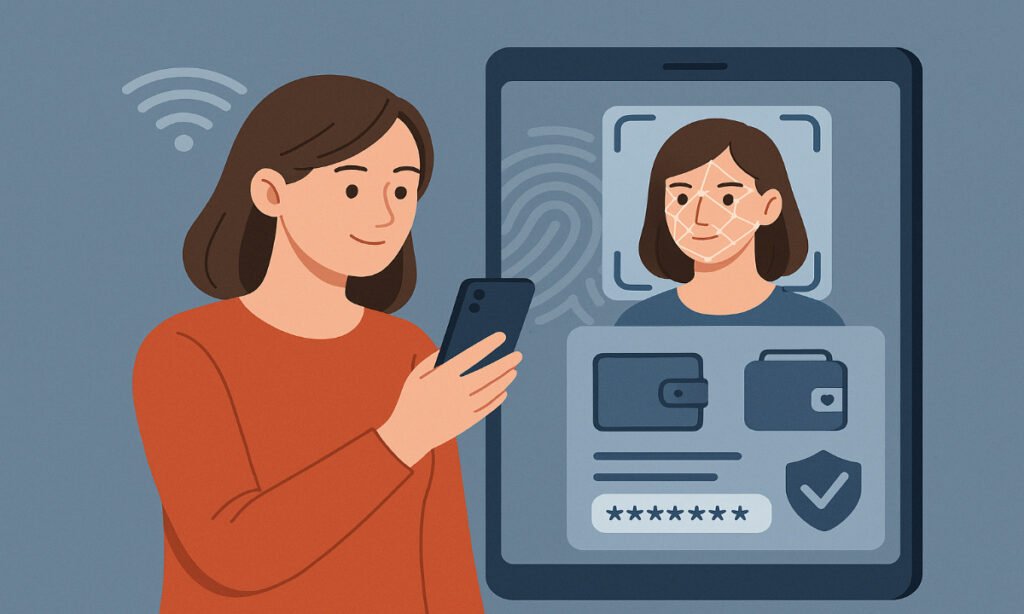
Biometric identity wallets are encrypted digital containers that hold a user’s verified identity and enable access to services using biometric authentication including fingerprint, facial recognition, iris scan or voice ID. Instead of using password or code, the wallet exploits an individual’s unique physical features to authenticate their identity locally on their device. These wallets carry data such as digital IDs, driver’s licenses, medical information, payment details, login keys and other personal information.
Contrary to traditional identity platforms in which a centralized database holds the records, biometric identity wallets leverage decentralized solutions. This means less risk of mass breach, and users get far greater control over when and how their data is shared.
Also read- Crypto Payment Rails in Mainstream E-Commerce
Why Biometric Identity Wallets Matter in 2025
1. Passwords Are A Thing Of The Past
Cybercrimes are getting more sophisticated and password-based systems are the low hanging fruit for hackers. As billions of passwords have been leaked and are available online, enterprises-led governments are rapidly implementing authentication based on biometrics to fill the security void. Biometric ID wallets eradicate weak credentials and replace them with powerful, individualized security.
2. Centralized Databases Are Too Risky
Traditional identity systems appear to be centralized storage, the entire user records of millions of people are stored in one location. These “data gold mines” are also targeted by hackers because a single breach can uncover a huge amount of personal information. Biometric identity wallets are different: private information remains encrypted inside the wallet, usually on the device.
3. Users Want More Control Over Personal Data
Privacy is a big deal. People want to know who is using their information and for what purpose. Biometric identity wallets give control back to the person, enabling them to instantly say yes or no to requests for their information.
4. Government and Financial Services Are Going Digital
Countries are adopting digital ID schemes, digital passports and e-government. Biometric log-in options are being built into financial institutions, so identity wallets are a perfect fit for the secure, high-trust industry.
5. Seamless User Experience
The average digital user lives in haste, and wants everything easy to access. Thanks to biometric identity wallets, the process of signing into accounts, authenticating payments or notarizing documents is smooth. Never again to remember passwords to deal with your OTPs or type long security codes.
How Biometric Identity Wallets Work
1. Identity Enrollment
Users start by proving who they are with official documents and biometrics. The wallet then keep a representation of this verified identity.
2. Encrypted Local Storage
The majority of biometric identity wallets hold their encrypted data within the device of the user. The data can not be accessed even the device is stolen without the right biometric matching.
3. Biometric Matching
the wallet compares the user’s current biometric input with a previously stored template each time an authentication is needed. Only matching data unlocks the wallet.
4. Selective Data Sharing
These wallets allow you to selectively disclose, rather than finally sharing full identity information. Without revealing your full birthdate, for instance, you can demonstrate that you’re over 18.
5. Decentralized Verification Optional
Some wallets employ blockchain or other decentralized networks to confirm legitimacy without handing over personal records to third-party databases.
Also check- What Is Model Number XUCVIHKDS? A Complete Guide
Key Features of Modern Biometric Identity Wallets
1. Multi-Biometric Authentication
Users can use a combination of biometrics , like fingerprint and face ID to authenticate themselves.
2. Zero-Knowledge Proofs
Sophisticated wallets utilize zero-knowledge cryptographic proofs to assert identity information without exposing any private information.
3. Decentralized Identifiers (DIDs)
It gives its users a unique identity they have full control over, and is not tied to any centralised service provider.
4. Offline Security
Biometric identity wallets can even authenticate identity offline, on-device.
5. Cross-Platform Access
Wallets and their contents are synced automatically across smartphones, laptops, tablets, and wearable devices, enhancing convenience without sacrificing security.
Where Biometric Identity Wallets Are Already Used
1. Banking & Financial Services
Biometrics are used by most banks now to log in securely and prevent fraud. Identity wallets
mitigate account takeovers and fraudulent transactions.
2. Government & Public Services
Nations rolling out digital ID cards and passports are incorporating biometric wallets to offer their citizens secure access to online services.
3. E-Commerce & Digital Payments
Wallets enable users to authenticate purchases promptly and help lower online payment fraud.
4. Healthcare Platforms
Medical identity verification is essential in safeguarding health records and preventing insurance fraud.
5. Workplace Security
The use of biometric wallets is also popular with companies that require employee authentication, secure facility access, and remote work verification.
Benefits of Biometric Identity Wallets
1. Enhanced security
Biometric information is very difficult to fake, and decentralized structures reduce the chances of hacking.
2. Authentication under a second
Instant identity confirmation sits at the core of the best user experiences in apps and services.
3. Protection of privacy
Users of the platform are in control of who they share their data with and what data they share, and they can refuse to make any information they consider unnecessary to share.
4. Fraud Reduction
Wallets also contribute to the reduction of identity thieves accessing your information, as well as unauthorized users who make payments on your behalf.
5. A Borderless Digital Identity
Users can be verified once and then use their identity across multiple platforms globally, without the need for multiple accounts or logins.
Challenges of Biometric Identity Wallets
But these wallets are not without their challenges:
- Strong device security is required
- Worries about misuse of biometric data
- Different government regulations
- Non-interoperability of platforms
- User reluctance to use the new identity systems
Nevertheless, these barriers are gradually being overcome by fast technological advances and more rigorous international standards.
FAQs
1. What is a biometric identity wallet?
They are secure digital tools that contain information about your identity, and they leverage biometrics to authenticate.
2. Are biometric identity wallets safe to use?
Yes, the strong protections include encryption, decentralized storage, and your own unique biometric data.
3. Could passwords be replaced by these?
In certain platforms, biometric identity wallets are already a password-free login option.
4. What can I store in them?
IDs, health care records, keys to make payments, login information, and personal papers that have been verified.
5. Are they compatible with iOS and Android?
Most current wallets allow you to use your smartphone, tablets and computers with biometric capabilities.
Conclusion
Biometric identity wallets are an eye towards a better secure, user-controlled digital identity in an increasingly cyber-threat-riddled world. Replacing passwords with biometric authentication and decentralized security, these wallets provide users with stronger security, faster access, and more privacy across the online ecosystem. As new identity standards are adopted by governments, banks and global platforms, biometric identity wallets are emerging as a critical building block for secure digital living. The future of online security is personal, biometric, and user-controlled—situated exactly where it should be.