The worldwide migration to digital commerce has spurred uptake in cryptocurrency transactions, which in turn is bringing crypto payment rails to the forefront as one of the most disruptive innovations of the decade. As the world of online shopping continues to evolve, merchants and consumers are in need of quick, secure and inexpensive ways to pay that do not come with the constraints imposed by the traditional banking system.
Crypto rails are entering this era, offering borderless payments with lower transaction fees and near-instant settlements. With the advent of stablecoins, scalable blockchain networks, and integrated payment processors, traditional e-commerce is poised to enter a new age of technological sophistication that marries convenience with the financial empowerment of decentralization.
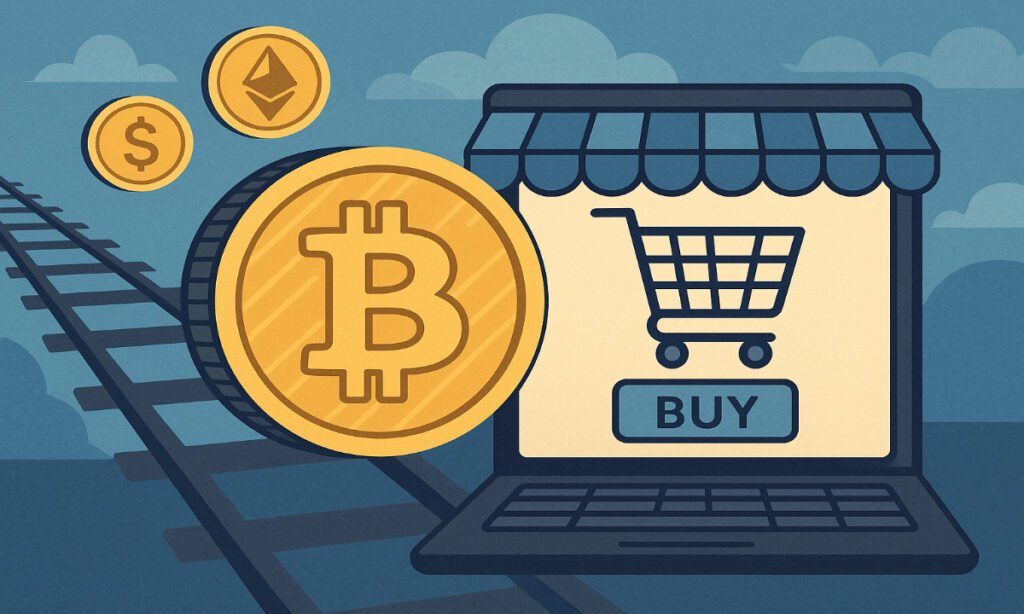
What Are Crypto Payment Rails?
Crypto rails are blockchain networks that facilitate the smooth transfer of cryptocurrencies from one entity to another. They are like roads and highways in the digital world that allow transporting value between wallets, exchanges, merchants, and websites. These are the blockchain rails for payments, analogous to those centralized rails of credit card networks, banks, and payment gateways. It removes the necessity for getting payment verification and approval from intermediaries, decreases the transaction fees and speeds up payment verification.
In real world terms, those rails let customers pay with Bitcoin, Ethereum, USDT, or other crypto assets for goods and services. Merchants also have the option to receive the payment directly in crypto, or convert it immediately into local currency. Most of the complexity is hidden by the elegant front-ends of today’s wallets or payment providers.
Also read- What Is Model Number XUCVIHKDS? A Complete Guide
Why E-Commerce Is Adopting Crypto Payment Rails
1. Lower Transaction Fees
Credit cards and digital payment processors charge 2-3% per transaction. For large businesses, these fees quickly add up. Because they are decentralized, crypto payment rails also charge a fraction of the fees one would expect to see on other types of cards as they don’t have multiple layers of middlemen.
2. Borderless, Universal Transaction
Crypto-payment rails enable vendors to receive funds from all over the world without being impacted by currency conversion, unexpected wait times, or steep international fees. This contributes to a more globally friendly approach to shopping online.
3. The Best Cash Flow Through Quicker Settlements
One of largest benefits of crypto payments is settlement speed. Standard bank transactions, in particular international ones, can take a couple of days to process. Because transactions using blockchain technology are finalized in seconds or minutes, retailers which accept cryptocurrency experience a boost in cash flow as payment and delivery delays are put behind them.
4. Better Security and Less Fraud
Transactions on blockchain are tamper-proof. This transparency also reduces chargebacks, fraudulent reversals, and stolen identities. Online retailers are plagued with fraud: Crypto rails offer a safe haven.
5. More and more people want crypto
Millions of consumers who grew up with digital technology want to pay with crypto because it offers privacy, speed, and convenience. Merchants that incorporate crypto payment rails consequently gain access to an audience that is expanding quickly and whose interests on tech-driven lifestyles and online global commerce align with those of advanced mobile and global consumers.
How Crypto Payment Rails Work in Mainstream E-Commerce
1. Customer Initiates Payment
When it’s time to checkout, the buyer chooses a crypto payment method (BTC, ETH, USDT, and so on).
2. Payment Processor Validates the Transaction
The payment request is processed by platforms such as Coinbase Commerce, BitPay or Stripe Crypto, along with a wallet address is also provided for you to send funds.
3. Blockchain Confirms the Transaction
The rail of payment crypto broadcasts the transaction to the blockchain for verification by the network validators.
4. Merchant Receives Funds
The vendor is paid either directly in crypto or via instant fiat conversion according to their preferences.
5. Payment Recorded Automatically
It registers the payment, informs the order, and sends receipts.
This flow enables a simple, automated, and secure process while shielding blockchain complexities for users.
Also check- TheJavaSea.me AIO‑TLP370 Leak: Risks, Impact, and Protection
Types of Crypto Payment Rails Used Today
1·Layer 1 Blockchains
- Bitcoin
- Ethereum
- Solana
- Avalanche
These are directed and should be paid straight away; however they depend on their respective mining pools with respect to fees and speed.
2. Layer-2 Scaling Networks
Lightning Network (Bitcoin)
- Base
- Polygon
- Arbitrum
They have lower fees and faster confirmation, and are ideal for microtransactions.
3. Stablecoin Rails
Using USDT, USDC, DAI, or PYUSD eliminates worries about volatility, which is why they’re so great for e-commerce.
4. On/Off-Ramp Providers
Processors such as MoonPay or Ramp make it easy for users to go from fiat to crypto and back again.
Real-World Adoption of Crypto Payment Rails
Major corporations turning on crypto payment rails include:
- Shopify (via Coinbase Commerce, BitPay)
- Stripe (crypto transactions on Base )
- PayPal (enabling PYUSD payments)
- Overstock
- Twitch
- Newegg
As infrastructure matures and demand grows, more SMBs and global retailers are joining.
Benefits for E-Commerce Businesses
1. Lower Operating Expenses
Transaction fees are low and the settlements are automated, so the work is much easier.
2. Greater Trust & Transparency
You get verifiable transactions without complex auditing thanks to blockchain tracking.
3. No Bank Restrictions
Day and night, crypto rails never take a break – no holidays and no delays.
4. Speedier Expansion into the World’s Markets
The number of crypto-native users is growing rapidly, presenting merchants with a new avenue for expansion.
Challenges to Consider
After the positive effects, businesses should be aware of the challenges:
- Price stability of non-stablecoin assets
- Some regional regulatory uncertainty
- Need to manage your wallet securely
- Hurdles in educating customers
- Complexity of integration for legacy systems
However, today’s payment processors address many of these concerns through friendly plug-ins that are easy to understand and implement.
The Future of Crypto Payment Rails in E-Commerce
The next stage of e-commerce will be enabled by:
- Payments are dominated by stablecoin
- Monitoring of fraud on blockchain with AI
- Integration of the CBDC
- Rewards and tokenized loyalty programs
- Cross-chain transactions without friction
- Escrow payments based on a smart contract
As crypto rails become faster, more environmentally friendly and inexpensive to use, they will be primed to dominate the payments landscape — as credit cards do today.
FAQs
1. What are crypto payment rails?
Those are e-wallet or payment app accounts that can be funded with digital currency, such as Bitcoin, and which can be used to make e-commerce transactions.
2. Are crypto payments secure for online retailers?
Yes. Blockchain adds transparency, security, and a lot less risk of fraud.
3. Can merchants convert crypto to fiat money immediately?
Yes, most processors have an option to convert funds into local currencies automatically.
4. What’s the most popular cryptocurrency for payments?
BTC, ETH, USDT, USDC, and some stablecoins too.
5. Do crypto rails for payments lower transaction fees?
Certainly—fees can be much lower than those for conventional credit card processing, for example.
Conclusion
Remodeling mainstream e-commerce through fast, secure and borderless payment experiences, crypto payment rails are reshaping the future. From reducing transaction fees to enhancing access globally, these rails bring strong benefits to merchants and customers alike. As blockchain technology advancements and regulations development, we will see a faster growth in adoption of crypto payment best practise. For companies that want to be up on the latest digital trends, adding support for crypto payment rails isn’t just an option, it’s a smart strategic investment in the future of online commerce.